
My draft SDA June newsletter
Dear Comrades,
This Month, Let’s Talk About Socialism
Not Socialism itself—as I’ve already defined it on the website:
Free Education, Universal Health Care, Anti-Death Penalty, Pro-Abortion, Universal Basic Income, the Right to Unionize, the sanctity of the Separation of Church and State, and the belief that the Government should make life bearable for all and ensure citizens' Liberties.
Instead, this month’s newsletter focuses on the language of Socialism.
This shared language—spoken by Socialists across borders—signals familiarity with the tradition. It opens doors and fosters solidarity.
When you use it, you are recognized as part of the movement.
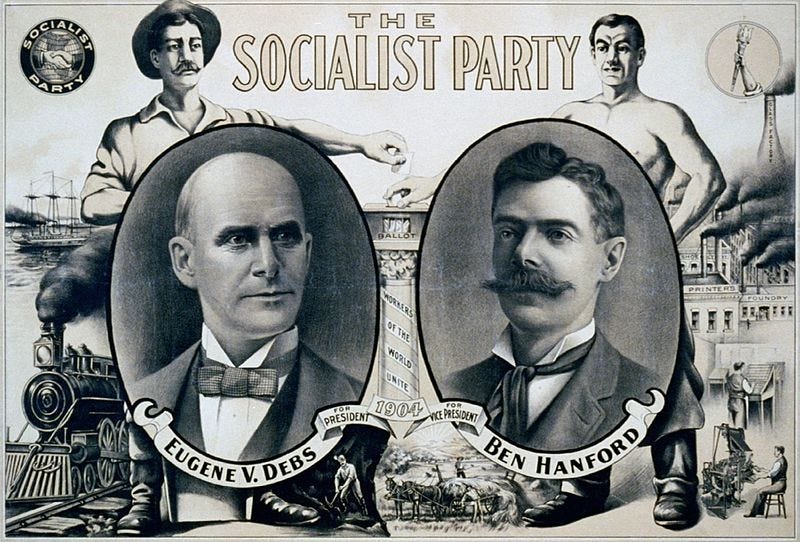
The Name “Socialist” Isn’t Always What It Seems
Today, several U.S. organizations use the word “Socialist” in their name:
Socialist Party USA: https://www.socialistpartyusa.net
Socialist Alternative: https://www.socialistalternative.org
World Socialist Web Site: https://www.wsws.org
Party for Socialism and Liberation: https://pslweb.org
Democratic Socialist of America: https://dsausa.org
While each is part of the broader Left, none are Socialist parties in the international sense.
What makes a Socialist Party?
At its core, a Socialist Party is defined by its openness—especially to debate, dissent, and the exchange of new ideas. True Socialist traditions welcome internal discussion as a sign of strength, not weakness.
Some groups that call themselves “Socialist,” however, are so concerned about infiltration that they discourage disagreement—even during the recruitment process—undermining the democratic principles they claim to uphold.
The Social Democrats of America (SDA) take a different approach. We use the bylaws of the French Socialist Party as a framework to train members in the established traditions of Socialism.
To be clear: SDA is not competing with other groups on the Left. We are the Socialist organization rooted in the legacy and practices of the Socialist International.
As Jean-Luc Mélenchon once observed, our rules are open and democratic—though perhaps more lenient than some would prefer. Still, openness remains a core strength of our political culture.
Who Is a Socialist?
To be a Socialist means belonging to an organization that embraces the evolving principles of the Socialist International.
While formal membership in the Socialist International isn’t required, alignment with its values is essential. These principles—outlined in the Declaration of Principles—are the product of ongoing dialogue and collective decision-making by member parties at regular congresses: https://www.socialistinternational.org/about-us/declaration-of-principles.
Socialism is not a fixed doctrine. It changes over time, shaped by historical context and democratic debate. That’s why we often speak of Socialisms in the plural—to acknowledge the different paths taken. But for the mainstream, the definition of Socialism is the one affirmed by Socialist parties at their congresses.
Our organization reflects that tradition. It is shaped by veteran members of parties affiliated with the Socialist International and by a new generation of American members committed to learning, organizing, and leading.
Social Democrats, USA
After Michael Harrington’s departure, Social Democrats, USA (SDUSA) drifted significantly to the right, ultimately leading to its collapse and expulsion from the Socialist International.
In recent years, SDUSA has made efforts to rejoin the Socialist International and was invited to attend its Madrid Congress.
Social Democrats, USA : https://socialistcurrents.org
https://socialistcurrents.org/?p=4066

https://socialistcurrents.org/?p=4076

https://socialistcurrents.org/?p=4041

As these posts make clear, Congresses are pivotal moments for shaping Socialist policy—and we look forward to participating more fully in future ones.
The Social Democrats of America (SDA)
SDA combines international Socialist experience with a new generation of American leadership.
SDA keeps things simple:
One monthly meeting on the first Wednesday of the month at 8 p.m. Eastern to discuss being Socialist in the Democratic Party.
One monthly meeting on the first Wednesday of the month at 9 p.m. Eastern to discuss Socialism 101.
One monthly local Democratic Party meeting.
We follow the rules we set. Now that SDA is established, we are focused on recruitment.
We are the Socialists!
Our roots trace back to the Paris Commune, which inspired Karl Marx and Friedrich Engels.
The French Socialist Party, heir to the Commune’s legacy, recently held its 81st Congress on June 15, where Socialism was once again defined for France.
Photos from the Congress:
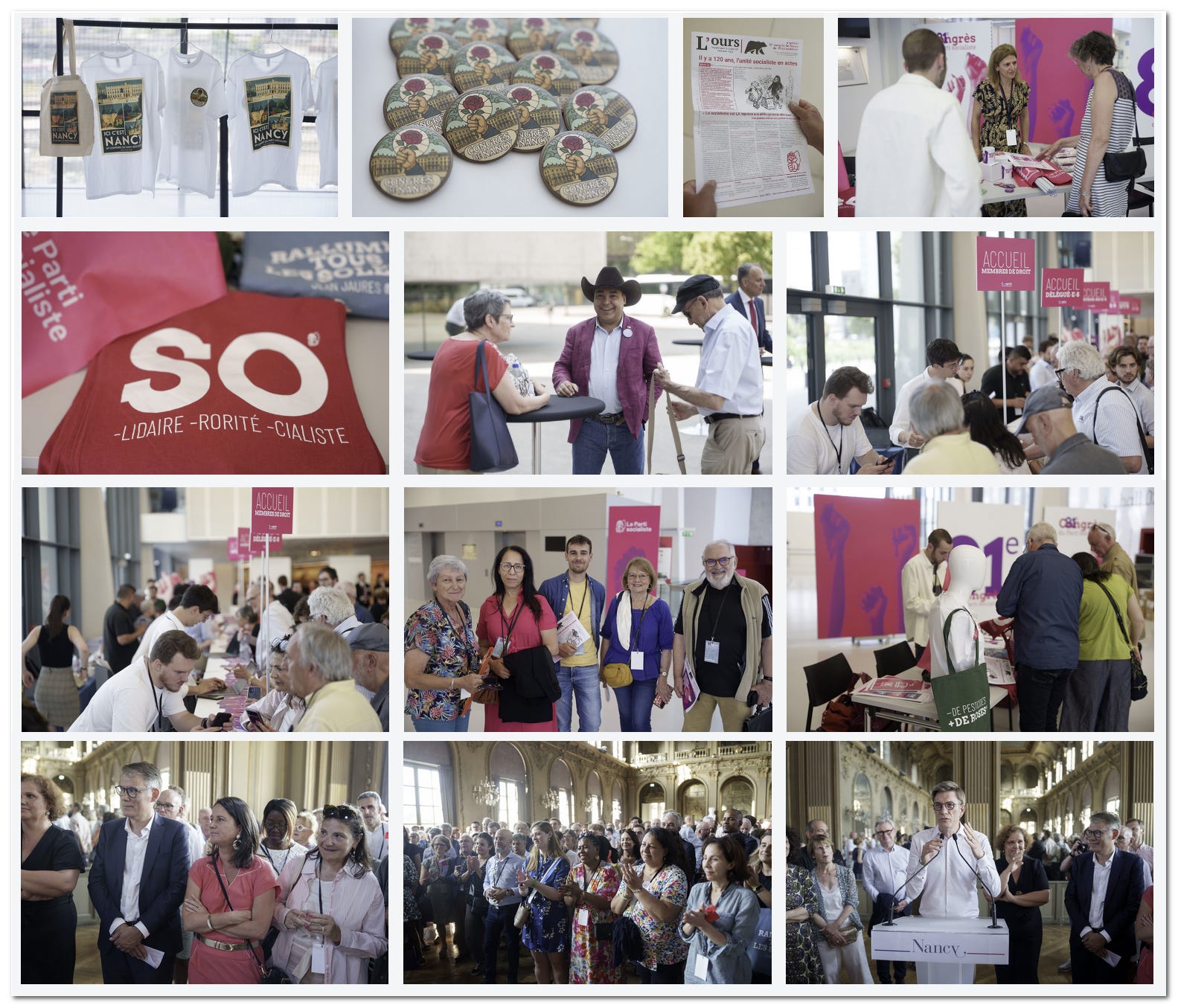
Day 1: https://www.flickr.com/photos/partisocialiste/albums/72177720326887856
Day 2: https://www.flickr.com/photos/partisocialiste/albums/72177720326887851
Day 3: https://www.flickr.com/photos/partisocialiste/albums/72177720326887836
June 2025: What a Month to Be a Socialist
The French Congress appeared cheerful on the surface, but each delegation arrived with proposals and strategies, competing for influence in the final manifesto and on the political bureau.
While enthusiasm for “Socialism” is welcome, terminology matters.
Amid that, a major development occurred in New York: Zohran Mamdani, a Mélenchonist candidate associated with DSA, secured the Democratic nomination for Mayor.
While enthusiasm for “Socialism” is welcome, terminology matters.
The Truth About Zohran Mamdani, is that he is not a Socialist. He is a Mélenchonist.
What is Mélenchonism?
Mélenchonism refers to a current of the Left inspired by Jean-Luc Mélenchon, who left the French Socialist Party in 2008 to form a new coalition to the left of the Communists.
Mélenchon’s rhetorical skills and global reach have gained him admirers, including Mexico’s President Claudia Sheinbaum and Brazil’s President Lula da Silva. While his movement has appeal, it diverges sharply from Socialist traditions.

Mélenchon’s explicit goal has been to weaken and ultimately replace Socialist parties.
Nonetheless, Socialist parties, valuing unity and coalition-building, continue to engage with France Unbowed (LFI) when appropriate—despite internal tensions. These tensions have been well-documented in La Meute, a French exposé, and mirrored in U.S. coverage such as Ryan Grim’s book on AOC and progressive politics.


DSA continues to call itself “Socialist,” but its platform is rooted in Mélenchonist ideas. This distinction is important.

The French Socialist Party acknowledged these ideological differences during negotiations with Communists, Greens, and LFI to draft a shared platform:
You can read it here: https://politicnyc.com/manifestos/ProgressiveManifestos.pdf.

Even the Democratic Socialists of America themselves acknowledge the shift:
The French 81st Congress
Le Monde described the Congress as overshadowed by Mélenchon’s presence, which he both denied and relished: https://www.lemonde.fr/en/opinion/article/2025/06/17/the-french-socialists-a-show-of-impotence_6742427_23.html.
The Nancy congress, which was supposed to represent the party's emancipation, played out entirely in the shadow of LFI leader Jean-Luc Mélenchon, who feigned surprise at the attention he received, only to relish it.
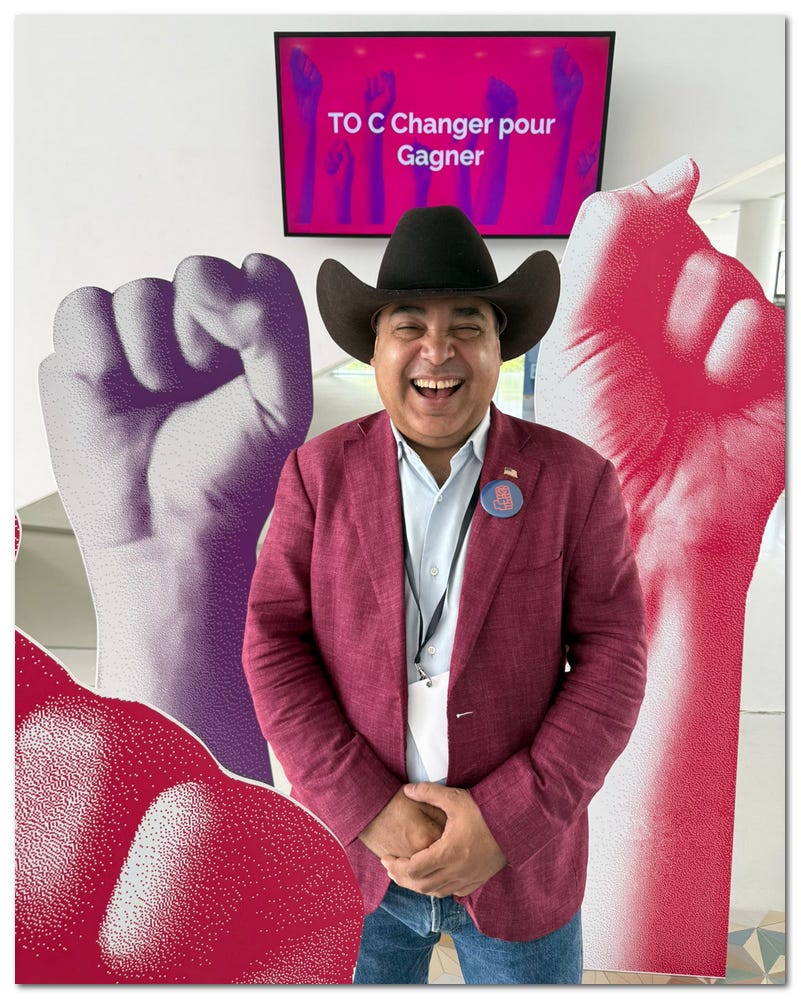
Some attendees, including myself, pushed for a clear departure from Mélenchonist politics, drawing on experiences with DSA in the U.S.
Accusations of diluting the PS
Faure, the proponent of a form of "environmental socialism" of which he has failed to define the content over seven years, had hoped to prove, in Nancy, his ability to establish the PS within a left-wing coalition that would be broad enough to sideline LFI. Yet the weak level of support he has within his party has left him even more vulnerable to accusations of diluting the PS. His rival, Mayer-Rossignol, who called for a "Socialist affirmation" along a much more reformist line, yet who remained vague about potential alliances, was no more convincing than Faure.
The Socialist International at Nancy
At the Congress, I ran into Chantal Kambiwa, General Coordinator of the Socialist International.
As a member of the French Socialist Party, I conveyed to the French leadership the need to reconsider France’s current representative to ensure effective dialogue between European Socialist parties and SDA.
I made it clear that the French representative to the International needs to be replaced and it was.
Kambiwa herself had been expelled from her own party, yet was placed in her role by the Spanish PSOE. As far as SDA is concerned, Socialism must be built as a community, with minimum principles respected by all.
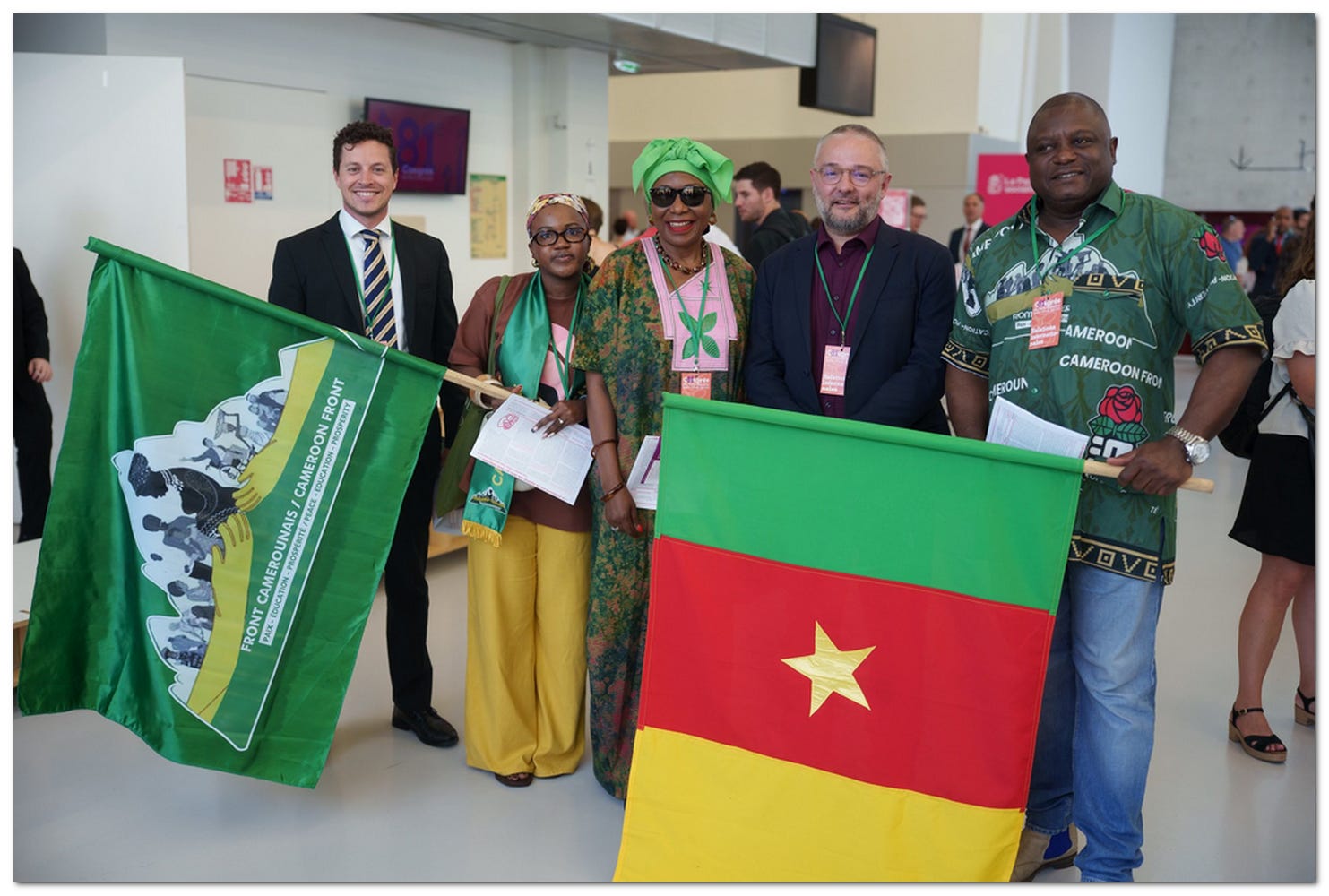
The Socialist International has not taken a strong position recently. It is up to the Socialist diaspora in the U.S. to demand accountability.
The Progressive Alliance meeting in Hyderabad
The Progressive Alliance meeting in Hyderabad was marred by internal manipulation.
Members of India’s Congress Party shaped the agenda to their advantage, and some speakers were silenced.

Meanwhile, the Progressive International—aligned with Mélenchonist tendencies—was invited to the Progressive Alliance members surprise.

Each organization must stay focused on its own path.If you are a dual citizen and a member of a Socialist International–affiliated party or of the Progressive Alliance, you must choose:
It’s time to build Socialism in the U.S. or step aside.
If you are a dual citizen and part of the Socialist International or Progressive Alliance, you must choose:
Resign from your foreign party role, or
Work openly within the United States to build Socialism.
It’s no longer acceptable to support Socialism abroad while hesitating to do so in the U.S.
I know firsthand what it means to be an elected Socialist.
In my municipal council, I was betrayed by a colleague who admired Franco. Nonetheless, I earned the respect of others as a Socialist through my work.
No More Double Game
If you are a Socialist abroad but adopt liberal positions here in the United States, that approach has run its course.
That’s why we used the 2024 European Socialist Manifesto as our foundation:
If you are a Socialist, be one—consistently. There’s no more hiding behind ambiguity.
Corruption at the PSOE
There’s now a corruption scandal involving Pedro Sánchez, President of the Socialist International.

Until this is resolved, the Socialist International is unlikely to respond effectively.
But as Mélenchon has pointed out: “Elections, mass education, and if you lose, you wait for the next blow.”
We are prepared to wait for the next congress—and to keep building.